

In many instances, the competition for federal discretionary funds compels grantees to make commitments that surpass their actual capabilities.
This webinar will examine the potential pitfalls that may jeopardize an entity when it commits to unrealistic objectives and to a budget incapable of achieving the proposed outcomes.
The session will focus on (1) the standards set forth in the Uniform Guidance for performance and the manner in which federal agencies utilize these standards to ensure accountability from grantees regarding the promises articulated in their approved grant proposals, and (2) how grant managers can leverage this information to act as the voice of reason during the critical pre-award proposal process.
Learning Objectives
- Identify common pitfalls in proposal development that can undermine post-award compliance, and explain how strong internal controls support effective proposal development and submission.
- Provide grant managers with the tools to explain why developing a clear, realistic, and implementable Statement of Work is essential to successful grant management.
- Recognize common challenges in obtaining prior approvals from federal agencies and apply strategies to manage those requirements effectively.
- Strengthen understanding of key Uniform Guidance requirements related to grantee responsibilities for monitoring and reporting program performance.
Who Should Attend
This webinar is designed for grant managers, resource administrators, and finance administrators.
YOUR EXPERT:
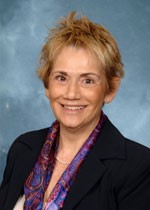 Toni DeMaglio
For over twenty-five years, Toni DeMaglio has performed post-award grant management duties, and served as a compliance officer at two institutions of higher education. In this capacity, she provided interpretation of policies and rules to ensure the conformance of federal and state laws, rules, regulations, and agency/program policies. Her primary responsibility was to keep grants in the state of audit-readiness by providing technical assistance to college personnel in the areas of fiscal integrity as they relate to programmatic activities. She worked closely with project directors and financial services to prevent and identify activities and charges that would be unallowable under grant regulations, and if required, recommends corrective action plans. Toni designed grants management training for grant project directors, administrators, and support staff. She also assured that statutory/administrative requirements and grant conditions have been met during the closeout of each grant.
In addition to State and private foundation grants management, she has extensive experience providing oversight for grants from the US Department of Education; the National Science Foundation; the US Department of Labor; Health and Human Services; and the National Endowment for the Humanities. Her previous grants management experience included serving as a project director for federal, state, and private grants, under her leadership, grants consistently exceeded their objectives.
As a grant management consultant, she has been retained as a compliance expert where she assesses post-award management gaps, recommends processes and procedure improvements; assesses post-award management needs; and designs grants management professional development training.
As a grants management trainer, she had developed an on-line course for subrecipient grant management; developed and delivered one and two-day grants management training programs, as well as, developed and delivered national training webinars on topics including: grants policy requirements, development and implementation; site visits; reporting; travel; effort reporting; procurement; allowable cost; personnel payroll documentation; policy requirements; and subrecipient monitoring.
Toni is often requested to present at national and statewide conferences on compliance and grant management issues and has served as a peer panel reviewer for seven federal grant award competitions. She has chaired the Education Committee and served on Board of Directors for the National Grants Management Association and was one of the six subject matter experts who developed the content of the Body of Knowledge for the Specialist Certification in Grants Management. Currently she serves as on the Thompson Grants Editorial Advisory Board.
Delivery Method: Group Live
Program Knowledge Level Policy:
The sponsor assures that the program content and program level is appropriate for the intended participants. The knowledge level of the course must be specified so that participants can determine if the program is appropriate for their development needs. Knowledge levels consist of: basic, intermediate, advanced, overview and update. All programs must clearly identify prerequisite education, experience and advanced preparation. A course knowledge level of intermediate, advanced or update inherently has an education or experience prerequisite, which should be included in the program descriptive materials. CPE Standard Reference: Standard 2 and 3.
Refund Policy:
If you are not able to attend for any reason, please notify us as soon as possible. Cancellations received 24 hours prior to the start time of the audio conference are fully refundable. After that, cancellations are subject to a $25 processing fee. If you prefer, you may substitute an upcoming audio conference for the one you originally registered for and avoid the $25 processing fee. All refunds resulting from cancellations will be issued within 72 hours.
Complaint Resolution Policy:
Participants are encouraged to submit complaints as soon as possible to ensure timely resolution. Complaints must include the participant's name, program name, date of the program, and a clear description of the issue. Complaints can be submitted through the following methods:
- Email: afaye@columbiabooks.com
- Phone: 1-800-677-3789
- Mail: Thompson Grants, a division of CBIS, 1500 Wilson Boulevard, Suite 920, Arlington, VA 22209

CONTACT
 Headquarters
 1.800.677.3789
- Contact Us
Copyright © Thompson Grants, a division of CBIS. All rights reserved.